A toilet that will not clear, a gurgle from the shower, waste coming back up. On a sewered property that list means one thing, and clearing the line fixes it.
Plenty of properties out here are not on sewer. They run an on-site system instead: a septic tank, or an aerated treatment system with a blower and a pump. On those properties the waste does not leave the land at all, and the same symptoms have a completely different set of causes. Clearing a pipe that was never blocked is one of the most common wasted call-outs in this area.
On an on-site system the drain and the disposal are two separate things, and only one of them is a pipe. A full tank, a failed pump or blower, or ground too saturated to accept effluent will all present at the toilet exactly like an obstruction while the line itself is entirely clear. Establish which system you are on before anybody quotes to clear anything.
- Confirm first whether the property is on sewer or an on-site system
- On an on-site system, check whether the alarm is sounding
- Note whether the ground around the disposal area is wet or smells
- Ask when the tank was last emptied and serviced
- Only then talk about clearing a line
On this page
1. Two systems that fail in completely different ways
On a sewered property, everything past the boundary is somebody else's problem and the whole system is a pipe. A symptom inside the house means an obstruction between the fixture and the boundary, and that is nearly always what it is.
On an on-site system the waste leaves the house through a pipe, into a tank on your own land, and from there into a disposal area that has to absorb it. So there are three places a problem can be, and only the first is a pipe.
- The drain. A genuine obstruction between the fixture and the tank. This is the one clearing solves.
- The tank. Full, or with a failed pump or blower on an aerated system. Nothing can leave, so nothing can arrive.
- The disposal area. Ground that is saturated, compacted or has simply stopped accepting effluent. The tank cannot discharge, so it backs up in turn.
From inside the house, all three look identical. That is the entire problem, and it is why the first question matters more than any amount of equipment.
And it is not necessarily anybody acting badly. A plumber who was not told it is an on-site system will reach for the machine they always reach for.
2. Telling them apart before anybody arrives
- Is an alarm going, or has one gone recently? Aerated systems have them. An alarm is the system telling you it is the system rather than the drain.
- Is it one fixture or all of them? One fixture failing while others drain normally points at the pipe serving that fixture. Everything failing together points downstream, which on an on-site property means the tank or the disposal.
- Has it rained heavily? Saturated ground cannot accept effluent. A problem that appears in a wet week and eases in a dry one is a disposal problem, not a blockage.
- When was the tank last emptied? If nobody knows, that is a strong answer in itself.
- Is the ground over the disposal area wet, soft or smelling? That is the system telling you where the problem is.
- Is the blower running on an aerated system? Silence where there should be a hum is worth noticing.
Those six questions cost nothing and they very often decide, before anybody sets off, whether this is a job for a plumber, for a pump-out, or for a service technician.
3. When it really is the drain
Plenty of the time it is, and this is not an argument against clearing lines. It is an argument for establishing which problem you have first.
A genuine obstruction on an on-site property behaves the way one does anywhere: it usually affects fixtures downstream of it and not the ones above, it does not care whether it has rained, and it does not come with an alarm.
On rural blocks it is also more likely to be roots or a damaged section than the fat-and-wipes story that dominates suburban blockages, particularly on a long buried run between a house set well back and its tank. A camera settles it and gives you something to keep.
4. What a plumber can and cannot do with an on-site system
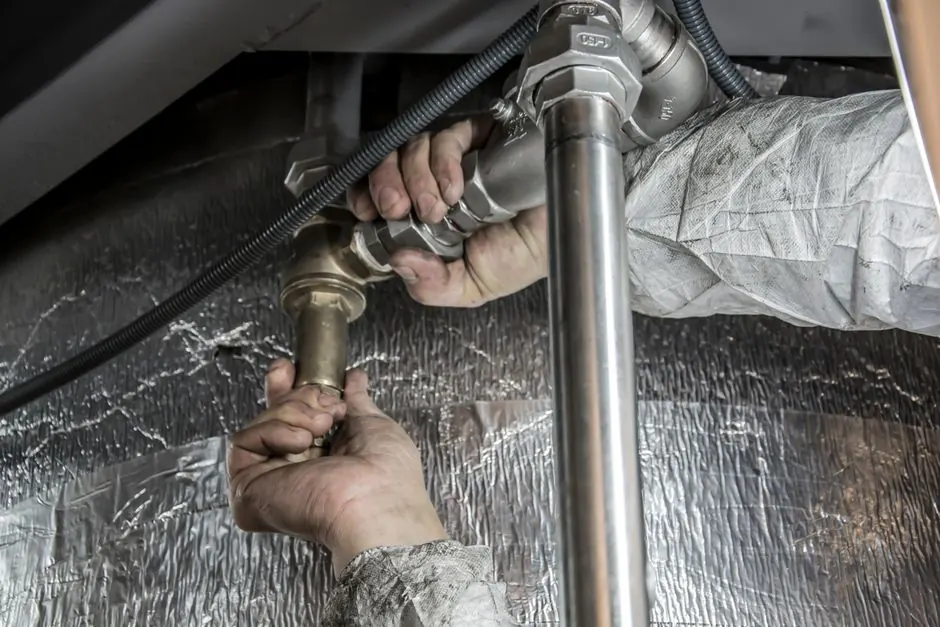
We can clear and camera the drainage between the house and the tank, repair or reline it, and tell you plainly whether the pipe is the problem. That is a real and useful answer even when it is a negative one.
What we do not do is pretend a full tank or an exhausted disposal area is a plumbing repair. A tank that needs emptying needs a pump-out. An aerated system with a failed blower or pump needs its service agent. A disposal area that has stopped accepting effluent is a bigger question than a plumber with a jetter can answer.
Telling you that costs you one call-out instead of one call-out plus a machine hire plus the same problem next week.
Not sure whether it is the drain or the tank?
Tell us it is an on-site system when you ring. It changes what we bring and what we check.
5. Living with an on-site system
- Know which type you have. A septic tank and an aerated system are different machines with different service needs.
- Know where the tank and the disposal area actually are. A surprising number of owners do not, particularly after buying.
- Keep a note of when it was last emptied or serviced, somewhere that survives a change of owner.
- Treat what goes in more carefully than you would on sewer. Wipes, fat and heavy cleaning chemicals all matter more when the biology is on your own land.
- Watch the disposal area after heavy rain. It is the early warning nobody looks at.
- If there is an alarm, find out what it sounds like and what it means before it goes off.
None of that is onerous, and the properties where it is done tend not to be the ones ringing at 6pm on a Sunday.
6. If you have just bought the place
This is where most of the confusion starts. Someone moves out from a sewered suburb, the property has an on-site system, and nobody explains any of it because the previous owner had simply absorbed it over twenty years.
The useful things to establish in your first month are all cheap: which system it is, where the tank and disposal area sit, when it was last emptied and serviced, whether there is an alarm and what it does, and whether the drainage between the house and the tank has ever been looked at.
Getting those answers in a quiet week is straightforward. Getting them at the moment everything is backing up is not.
- On an on-site system the drain and the disposal are separate, and only one is a pipe.
- A full tank, a failed pump or saturated ground looks identical to a blockage from inside.
- One fixture failing points at the pipe. Everything failing at once points downstream.
- A problem that appears in a wet week and eases in a dry one is a disposal problem.
- Say it is an on-site system when you ring. It changes what gets checked first.
- A plumber can clear and camera the line. A full tank needs a pump-out, not a jetter.
Septic, not a blockage FAQs
How do I know if I am on sewer or septic?
If nobody has told you, look for a tank, a lid or an access chamber on the property, and for a disposal area that is often a slightly different patch of ground. A recent purchase usually has something in the contract documents. If you genuinely cannot tell, it is worth establishing properly rather than guessing.
Everything in the house backed up at once. What does that mean?
Something downstream of all the fixtures, which on an on-site property most often means the tank or the disposal area rather than a blockage in one branch. It is the pattern that most reliably points away from a clearing job.
It only happens after heavy rain. Is that a coincidence?
Almost certainly not. Ground that is saturated cannot accept effluent, so the tank cannot discharge and backs up in turn. That is a disposal problem and clearing the line will not change it.
The alarm is going. Should I still ring a plumber?
Ring, and say the alarm is going, because that immediately changes the diagnosis. Depending on the system it may be a matter for your service agent rather than a plumber, and knowing that saves you a call-out.
Can you clear the line to the tank?
Yes, and we can camera it and show you what is there. On a property where the house sits well back from the tank that run can be long, which makes locating any fault precisely worth real money.
Is a septic tank and an aerated system the same thing?
No. An aerated system has a blower and a pump and treats the effluent, which means it has moving parts that fail and usually an alarm to tell you. A septic tank is simpler and fails more quietly. Knowing which one you have changes almost every answer.